
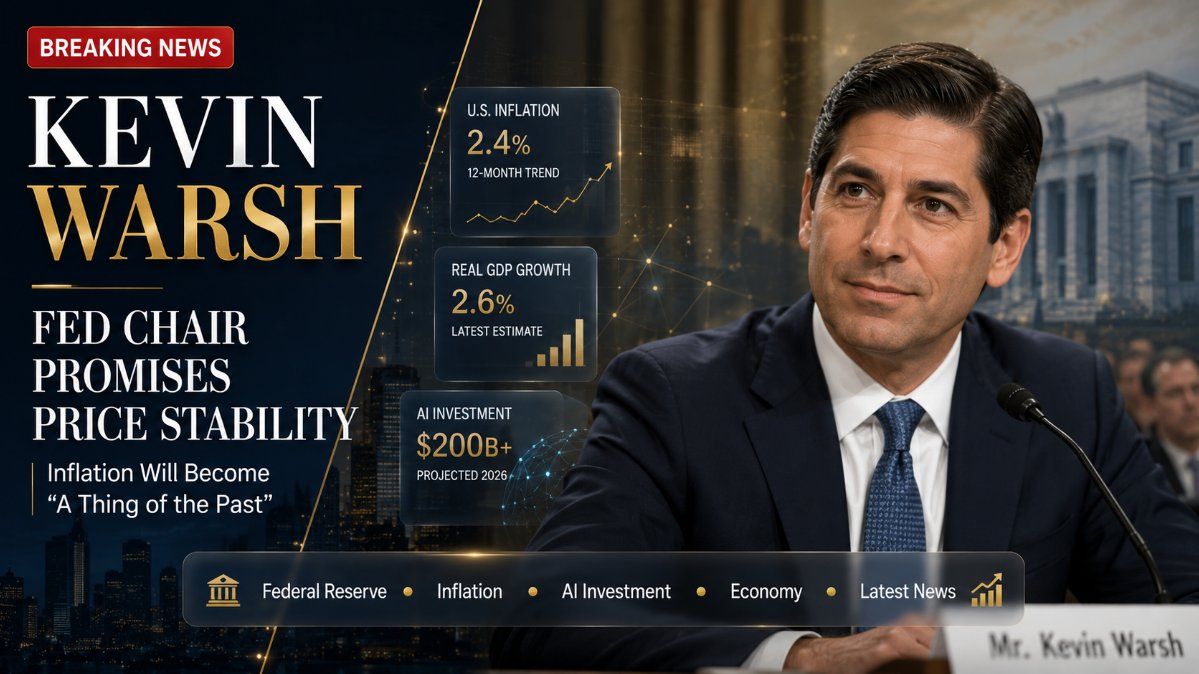
Kevin Warsh Biography (2026): Fed Chair Testimony, Inflation Outlook, AI Investment Boom, Career & More
Discover Kevin Warsh's 2026 biography, Fed Chair testimony, inflation outlook, AI investment views, career, education, family, and achievements.
Kevin Warsh has once again become one of the most closely watched figures in the global financial world. As Chair of the U.S. Federal Reserve, his comments on inflation, interest rates, economic growth, and monetary policy carry significant weight for financial markets, businesses, and households alike. Investors, economists, and policymakers carefully monitor his public appearances because even small policy signals from the Federal Reserve can influence the broader U.S. and global economy.
In July 2026, Warsh dominated financial headlines after appearing before the House of Representatives to testify on the state of the U.S. economy and the Federal Reserve's monetary policy. During the closely watched hearing, he delivered a confident message that the central bank was fully committed to restoring lasting price stability and bringing inflation under control.
His remarks quickly attracted attention because they reflected a firm stance on inflation while also presenting an optimistic outlook for America's long-term economic future. Warsh argued that the country was entering a period of major technological transformation driven by artificial intelligence, increased private investment, and productivity improvements that could strengthen economic growth without allowing inflation to return.
The hearing was widely followed by financial markets, economists, lawmakers, and business leaders, all looking for clues about the Federal Reserve's future policy direction. Warsh's testimony immediately sparked discussions about interest rates, inflation expectations, investment, and the next chapter of U.S. monetary policy.
As the Federal Reserve continues navigating a changing economic landscape, Kevin Warsh remains one of the most influential voices shaping financial policy in the United States.
Kevin Warsh Delivers High-Profile Congressional Testimony
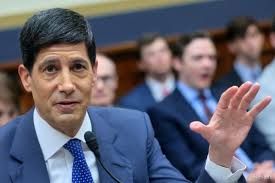 Kevin Warsh's appearance before Congress marked one of the most significant economic events of July 2026.
Lawmakers invited the Federal Reserve Chair to explain the current state of the American economy, discuss inflation trends, and outline the central bank's priorities for maintaining stable prices while supporting sustainable economic growth.
Throughout the hearing, Warsh emphasized that controlling inflation remains the Federal Reserve's highest priority.
He explained that stable prices create a healthier environment for consumers, businesses, investors, and workers by reducing uncertainty and allowing long-term financial planning.
Members of Congress questioned him on inflation, interest rates, labor markets, consumer spending, and broader economic conditions.
Warsh responded by stressing that the Federal Reserve remains committed to making policy decisions based on economic data rather than short-term political pressures.
His testimony projected confidence that inflation can be brought under control while preserving the long-term strength of the U.S. economy.
Warsh Says Inflation Will Become "A Thing of the Past"
One of the most widely discussed moments from the hearing came when Kevin Warsh expressed confidence that inflation could eventually become "a thing of the past."
The statement immediately drew widespread attention because inflation has remained one of the defining economic challenges in recent years.
Warsh explained that the Federal Reserve's objective is not simply to reduce inflation temporarily but to establish lasting price stability that supports healthy economic expansion.
According to Warsh, disciplined monetary policy combined with stronger productivity growth could significantly improve inflation conditions over time.
He noted that maintaining public confidence in the Federal Reserve remains essential because expectations about future inflation often influence current economic behavior.
His comments reassured many observers that the central bank intends to remain focused on achieving its long-term inflation target.
Artificial Intelligence Could Transform Economic Growth
Another major theme of Warsh's testimony centered on artificial intelligence and technological innovation.
Rather than viewing AI solely as a technological breakthrough, Warsh described it as an important driver of future economic productivity.
He argued that increased investment in artificial intelligence could improve efficiency across industries, allowing businesses to produce more goods and services while controlling costs.
Higher productivity, he suggested, may help strengthen economic growth without creating the inflationary pressures often associated with rapid expansion.
Warsh also emphasized that technological innovation has historically played a major role in improving living standards and expanding economic opportunity.
While acknowledging that emerging technologies create new challenges, he expressed optimism that continued investment in AI could benefit workers, businesses, and consumers over the long term.
His comments attracted significant attention from both financial markets and the technology sector, where many viewed the Federal Reserve Chair's outlook as an encouraging signal regarding future innovation.
Monetary Policy Remains Focused on Long-Term Stability
During the hearing, Kevin Warsh repeatedly emphasized that the Federal Reserve's decisions are guided by long-term economic stability rather than short-term market movements.
He explained that monetary policy requires patience because changes in interest rates typically influence economic activity over an extended period.
According to Warsh, maintaining credibility remains one of the Federal Reserve's greatest responsibilities.
He noted that consistent policy decisions help strengthen public confidence while reducing uncertainty for businesses and investors making long-term financial decisions.
Rather than reacting to temporary fluctuations, the central bank continues evaluating inflation data, employment trends, consumer demand, and broader economic indicators before adjusting policy.
This disciplined approach, Warsh explained, remains essential to achieving lasting price stability.
Lawmakers Question the Future Direction of Interest Rates
Members of Congress also questioned Warsh about the future path of interest rates.
Although he avoided providing specific guidance regarding upcoming policy meetings, he reiterated that every decision would depend on incoming economic data.
Warsh emphasized that the Federal Reserve does not follow a predetermined schedule for changing interest rates.
Instead, policymakers continually evaluate inflation, employment conditions, wage growth, business investment, and consumer spending before making decisions.
His responses reflected the central bank's longstanding practice of maintaining flexibility while responding to evolving economic conditions.
Financial analysts closely followed these comments because they may influence expectations regarding future borrowing costs for households and businesses.
Investors Closely Watch Every Statement
Financial markets paid close attention throughout Warsh's congressional testimony.
Investors analyzed his remarks for indications about inflation, future interest rates, economic growth, and Federal Reserve strategy.
Even subtle differences in language from the Fed Chair can influence stock markets, bond yields, currency markets, and broader investor sentiment.
Although Warsh maintained a measured tone throughout the hearing, his optimistic assessment of technological innovation and long-term productivity received considerable attention.
Many economists noted that his comments suggested confidence in the American economy's ability to expand while maintaining lower inflation over time.
The testimony reinforced Kevin Warsh's position as one of the world's most influential economic policymakers.
Why Kevin Warsh's Testimony Became a Major Financial Story
The July 2026 congressional hearing quickly became one of the most significant economic events of the year.
With inflation, interest rates, and economic growth continuing to shape financial decisions worldwide, every public appearance by the Federal Reserve Chair receives close scrutiny.
Warsh's optimistic outlook regarding inflation, combined with his belief that artificial intelligence can strengthen long-term productivity, provided a distinctive message during a period of continuing economic transition.
His testimony also demonstrated the Federal Reserve's commitment to transparent communication with lawmakers and the public.
As businesses, investors, and consumers continue monitoring future economic developments, Kevin Warsh's leadership at the Federal Reserve remains central to discussions surrounding monetary policy and the direction of the U.S. economy.
Congress Presses Warsh on the Federal Reserve's Next Steps
As the hearing continued, lawmakers sought additional clarity on how the Federal Reserve intends to guide the U.S. economy through the months ahead.
Questions covered inflation trends, employment conditions, business investment, consumer confidence, and the overall direction of monetary policy.
Kevin Warsh explained that the Federal Reserve remains committed to achieving its dual objectives of promoting price stability while supporting maximum sustainable employment.
He emphasized that every policy decision will continue to be based on carefully evaluating economic data rather than responding to short-term political or market pressures.
According to Warsh, maintaining public confidence in the central bank requires consistent decision-making, transparency, and a long-term perspective.
His testimony reflected a disciplined approach designed to keep the economy stable while preparing for future opportunities created by technological innovation and investment.
Warsh Highlights a New Direction for the Federal Reserve
One of the hearing's recurring themes was how Kevin Warsh's leadership differs from previous Federal Reserve administrations.
While acknowledging the work of earlier policymakers, Warsh explained that today's economic environment requires adapting to new challenges without losing sight of the Fed's core mission.
He emphasized a greater focus on restoring long-term price stability, strengthening institutional credibility, and communicating policy objectives more clearly to the public.
Warsh also discussed the importance of encouraging productive private-sector investment instead of relying solely on short-term economic stimulus.
His comments suggested that sustainable economic growth is more likely to result from innovation, productivity improvements, and responsible monetary policy than from temporary interventions.
Observers noted that his testimony outlined a leadership style focused on stability, predictability, and long-term economic resilience.
Inflation Remains the Central Priority
Throughout the congressional hearing, Kevin Warsh consistently returned to the issue of inflation.
He stated that keeping inflation under control remains essential because rising prices affect households, businesses, retirees, and investors across the country.
Warsh explained that stable prices provide families with greater financial certainty while allowing businesses to make long-term investment decisions with increased confidence.
He emphasized that inflation management should not be viewed as a temporary objective but as a continuing responsibility of the Federal Reserve.
According to Warsh, achieving lasting price stability creates the conditions necessary for stronger economic growth, higher productivity, and greater financial confidence throughout the economy.
His remarks reinforced the message that inflation control will remain a defining feature of Federal Reserve policy under his leadership.
Artificial Intelligence and Productivity Remain Key Themes
Beyond inflation, Warsh devoted significant attention to the economic potential of artificial intelligence.
He explained that advances in AI could improve productivity across manufacturing, healthcare, finance, transportation, education, and numerous other industries.
Higher productivity, he noted, enables businesses to produce more efficiently while helping control production costs over the long term.
Warsh suggested that continued investment in innovation could strengthen the American economy's global competitiveness while supporting sustainable wage growth and business expansion.
Rather than viewing technological change as a source of uncertainty alone, he encouraged policymakers to recognize the opportunities created by responsible innovation.
His optimistic perspective distinguished much of the hearing and generated considerable discussion among economists and technology leaders.
Financial Markets React to Warsh's Remarks
Investors and financial analysts followed every stage of Warsh's testimony with close attention.
Markets carefully evaluated his comments regarding inflation, interest rates, productivity growth, and future Federal Reserve policy.
Many economists observed that Warsh maintained a balanced tone throughout the hearing, combining confidence about long-term economic prospects with caution regarding ongoing inflation risks.
His remarks were widely interpreted as reinforcing the Federal Reserve's commitment to disciplined monetary policy rather than signaling abrupt policy changes.
Business leaders also welcomed his emphasis on innovation and investment, viewing technological progress as an important contributor to future economic expansion.
The hearing once again demonstrated how closely global financial markets monitor every public statement made by the Federal Reserve Chair.
Transparency Becomes a Defining Theme
Another important message throughout the hearing involved transparency and communication.
Kevin Warsh stressed that clear communication helps businesses, households, and investors better understand the Federal Reserve's objectives.
He explained that reducing uncertainty allows financial markets to function more effectively while strengthening public confidence in monetary policy.
Warsh noted that transparent policymaking encourages stability by helping individuals and organizations make informed financial decisions.
Rather than surprising markets with unexpected actions, he emphasized the importance of providing consistent explanations regarding the central bank's economic outlook and policy framework.
This approach, he suggested, supports confidence in both the Federal Reserve and the broader U.S. financial system.
Economists Continue Evaluating Warsh's Leadership
Since assuming leadership of the Federal Reserve, Kevin Warsh has remained one of the most closely watched economic policymakers in the world.
Economists continue analyzing his speeches, congressional testimony, and policy decisions to better understand the direction of American monetary policy.
Many experts believe his emphasis on price stability, productivity, institutional credibility, and technological innovation represents an important part of the Federal Reserve's current strategy.
Although economic conditions continue evolving, observers generally agree that Warsh has sought to communicate a consistent and predictable policy framework.
His leadership style has attracted attention not only within the United States but also among central banks, financial institutions, and international investors around the world.
Looking Ahead
As 2026 progresses, Kevin Warsh and the Federal Reserve will continue monitoring inflation, employment, consumer spending, business investment, and broader global economic developments.
Future policy decisions are expected to depend on incoming economic data rather than predetermined timelines, allowing the central bank to respond carefully to changing conditions.
Warsh has repeatedly emphasized that preserving price stability while encouraging sustainable long-term growth remains the Federal Reserve's primary objective.
His optimism regarding technological innovation, combined with a disciplined approach to monetary policy, continues shaping discussions about the future of the U.S. economy.
With markets closely following every policy announcement, Kevin Warsh's decisions will remain among the most influential factors affecting businesses, investors, and consumers in the months ahead.
Early Life and Childhood
Kevin Maxwell Warsh was born on April 13, 1970, in Albany, New York, United States. From an early age, he developed a strong interest in economics, finance, and public policy. His academic curiosity and analytical thinking helped shape the foundation for a career that would eventually span investment banking, government service, and central banking.
Growing up in New York exposed Warsh to diverse economic and business environments, encouraging his interest in how financial markets influence economic growth and public policy. These experiences inspired him to pursue higher education in economics and law.
Education
Kevin Warsh attended Stanford University, where he earned a Bachelor of Arts in Public Policy with a focus on economics and political science. His undergraduate education provided him with a strong understanding of public administration, financial systems, and government institutions.
After graduating from Stanford, Warsh continued his studies at Harvard Law School, where he earned his Juris Doctor (J.D.) degree. Although trained as a lawyer, he would go on to build much of his career in finance and economic policy rather than practicing traditional law.
His educational background combined legal reasoning with economic analysis, preparing him for senior leadership positions in both the private and public sectors.
Career at Morgan Stanley
Before entering government service, Kevin Warsh spent several years at Morgan Stanley, one of the world's leading investment banks.
During his time there, he worked in the firm's mergers and acquisitions division and later became involved in corporate finance and strategic advisory work.
His experience on Wall Street provided valuable insight into financial markets, banking operations, capital investment, and global economic trends.
The knowledge he gained during this period later proved useful as he transitioned into roles involving economic policy and financial regulation.
White House Economic Service
Kevin Warsh entered public service during the administration of President George W. Bush.
He served as a Special Assistant to the President for Economic Policy and as Executive Secretary of the National Economic Council.
In these roles, Warsh advised senior White House officials on financial markets, economic policy, banking issues, and broader domestic economic priorities.
His responsibilities included coordinating policy discussions among various government agencies and providing economic analysis to support presidential decision-making.
This period marked his emergence as an important voice in national economic policy.
Federal Reserve Governor
In 2006, Kevin Warsh was appointed by President George W. Bush to serve as a Member of the Board of Governors of the Federal Reserve System.
As a Federal Reserve Governor, he participated in monetary policy decisions, financial market oversight, banking regulation, and responses to economic challenges.
Warsh played an important role during the global financial crisis of 2008, working closely with other policymakers to help stabilize financial markets during one of the most challenging economic periods in modern history.
His experience at the Federal Reserve earned him widespread recognition as a knowledgeable expert in central banking and financial policy.
He served on the Board until 2011 before returning to the private sector and academic work.
Academic and Business Leadership
Following his service at the Federal Reserve, Kevin Warsh remained active in public policy, finance, and higher education.
He became associated with Stanford University's Hoover Institution, where he contributed research and analysis on monetary policy, financial markets, and economic growth.
Warsh also served on the boards of major corporations and participated in discussions involving international finance, banking regulation, and technological innovation.
His continued involvement in academic research and private-sector leadership allowed him to remain influential in debates surrounding the future of economic policy.
Leadership of the Federal Reserve
By 2026, Kevin Warsh had become Chair of the Federal Reserve, placing him at the center of American monetary policymaking.
As Chair, his responsibilities include guiding interest-rate decisions, overseeing monetary policy, maintaining financial stability, supervising parts of the banking system, and communicating the Federal Reserve's outlook to Congress, financial markets, and the public.
His leadership has focused on restoring long-term price stability, strengthening institutional credibility, and encouraging sustainable economic growth.
Warsh has also highlighted the importance of productivity improvements, technological innovation, and responsible investment as key drivers of future economic prosperity.
His public statements consistently emphasize that disciplined monetary policy remains essential for maintaining confidence in the U.S. economy.
Economic Philosophy
Kevin Warsh is widely recognized for advocating policies that emphasize stable prices, credible monetary institutions, long-term investment, and productivity-driven growth.
He has argued that sustainable economic expansion depends on maintaining confidence in the value of money while encouraging innovation and private-sector investment.
Warsh has also spoken frequently about the economic opportunities created by technological progress, particularly advances in artificial intelligence and digital innovation.
His approach combines traditional central banking principles with an optimistic view of the role technology can play in improving long-term economic performance.
Personal Life
Kevin Warsh is married to Jane Lauder, a business executive and member of the Lauder family.
Despite holding several high-profile public positions, Warsh generally maintains a relatively private personal life.
Outside of his professional responsibilities, he has remained involved in educational initiatives, economic research, public speaking, and policy discussions related to finance and global markets.
His ability to bridge experience from both Wall Street and Washington has made him one of the most respected figures in American economic policy.
Kevin Warsh Quick Facts
| Details | Information |
|---|---|
| Full Name | Kevin Maxwell Warsh |
| Date of Birth | April 13, 1970 |
| Age (2026) | 56 Years |
| Birthplace | Albany, New York, United States |
| Nationality | American |
| Profession | Economist, Banker, Lawyer |
| Current Position (2026) | Chair of the Federal Reserve |
| Education | Stanford University; Harvard Law School |
| Former Position | Federal Reserve Governor (2006–2011) |
| White House Role | Special Assistant to President George W. Bush |
| Spouse | Jane Lauder |
Career Highlights and Achievements
Kevin Warsh has built an accomplished career across finance, government, and central banking.
Some of his most notable achievements include:
- Graduated from Stanford University and Harvard Law School.
- Built a successful career at Morgan Stanley.
- Served in the White House as Special Assistant to President George W. Bush.
- Appointed to the Federal Reserve Board of Governors in 2006.
- Played an important role during the 2008 global financial crisis.
- Contributed to economic research through Stanford University's Hoover Institution.
- Became Chair of the Federal Reserve in 2026.
- Continues shaping U.S. monetary policy and economic strategy.
Interesting Facts About Kevin Warsh
- He began his professional career in investment banking before entering public service.
- He has experience in both the private financial sector and the highest levels of government.
- He served during the global financial crisis as a Federal Reserve Governor.
- He has written extensively on monetary policy and financial markets.
- He has been affiliated with Stanford University's Hoover Institution.
- He frequently discusses the importance of innovation and productivity in economic growth.
- In 2026, he attracted global attention for his congressional testimony on inflation and artificial intelligence.
- His policy speeches are closely followed by economists and investors around the world.
Frequently Asked Questions (FAQs)
Who is Kevin Warsh?
Kevin Warsh is an American economist, lawyer, and former investment banker who serves as Chair of the U.S. Federal Reserve in 2026. He previously served as a Federal Reserve Governor and as an economic adviser in the White House.
Why is Kevin Warsh in the news in 2026?
Kevin Warsh made headlines after testifying before Congress about inflation, monetary policy, price stability, and the role artificial intelligence could play in strengthening long-term economic growth.
How old is Kevin Warsh?
Born on April 13, 1970, Kevin Warsh is 56 years old in 2026.
Where did Kevin Warsh study?
He earned his bachelor's degree from Stanford University and later received his Juris Doctor from Harvard Law School.
What is Kevin Warsh known for?
He is known for serving as a Federal Reserve Governor, advising President George W. Bush on economic policy, and leading the Federal Reserve as Chair in 2026.
Who is Kevin Warsh married to?
Kevin Warsh is married to Jane Lauder.
What economic issues does Kevin Warsh focus on?
His public remarks frequently focus on inflation, monetary policy, financial stability, productivity growth, technological innovation, and long-term economic development.
Conclusion
Kevin Warsh has established himself as one of the most influential economic policymakers in the United States. From his early years at Morgan Stanley to his service in the White House, his role as a Federal Reserve Governor during the global financial crisis, and his leadership of the Federal Reserve in 2026, his career reflects decades of experience in finance and public policy.
His recent congressional testimony placed him once again at the center of national economic discussions. By emphasizing price stability, disciplined monetary policy, and the transformative potential of artificial intelligence, Warsh presented a forward-looking vision for the American economy while reaffirming the Federal Reserve's commitment to controlling inflation.
As financial markets, businesses, and policymakers continue monitoring economic developments, Kevin Warsh remains one of the most closely watched figures shaping the future direction of U.S. monetary policy and long-term economic growth.
James Anderson
Senior Pop Culture & Entertainment JournalistJames Anderson is a seasoned entertainment journalist specializing in celebrity lifestyles, pop culture news, and television retrospectives. With nearly a decade of experience, he brings insightful perspective to Hollywood trending stories.
More articles by James Anderson →