

Elena Kagan Biography (2026): Congressional Testimony, Supreme Court Cases, Judicial Career, Education & Latest News
Discover Elena Kagan's 2026 biography, Supreme Court career, congressional testimony, landmark cases, judicial philosophy, education, and latest news.
Elena Kagan remains one of the most influential figures on the United States Supreme Court, known for her thoughtful legal reasoning, measured judicial approach, and significant contributions to constitutional law. Since joining the nation's highest court in 2010, she has played a key role in numerous landmark decisions involving federal authority, civil rights, healthcare, immigration, environmental regulations, and administrative law.
In July 2026, Justice Elena Kagan once again became the focus of national attention after appearing before Congress alongside Justice Amy Coney Barrett during a rare public hearing concerning the judiciary. The hearing immediately attracted widespread interest because it is highly unusual for sitting Supreme Court justices to testify before lawmakers. The discussion centered on judicial independence, increasing public scrutiny of the Supreme Court, ethics, and the growing number of politically significant cases reaching the nation's highest court.
At the same time, Kagan also found herself in the headlines due to ongoing debates surrounding upcoming climate-related litigation before the Supreme Court. Several conservative organizations argued that she should not participate in certain environmental cases, raising questions about judicial impartiality and the standards governing when Supreme Court justices should recuse themselves from hearing particular disputes.
Beyond those developments, legal observers have continued to closely examine Kagan's role in major Supreme Court opinions, her influential dissents, and her ability to build consensus among fellow justices despite the Court's ideological differences. Her judicial philosophy and careful legal analysis have earned respect from scholars across the political spectrum, making her one of the Court's most closely followed members.
As the Supreme Court continues deciding cases with nationwide impact, Elena Kagan remains at the center of important constitutional debates, reinforcing her position as one of America's most influential legal minds.
Elena Kagan Appears Before Congress in a Rare Judiciary Hearing
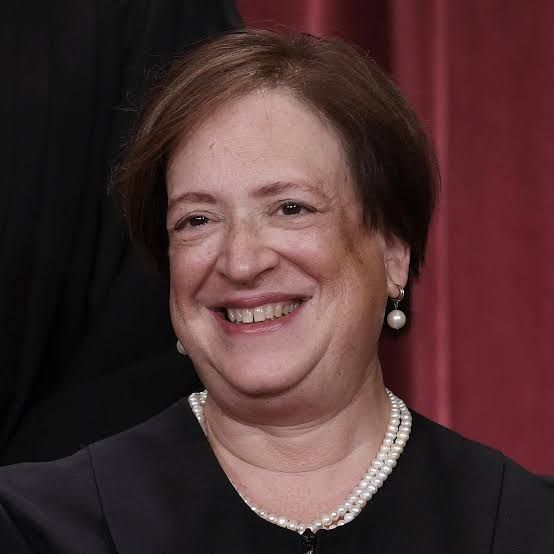 One of the biggest legal stories of July 2026 involved the rare appearance of Justice Elena Kagan before members of Congress. Alongside Justice Amy Coney Barrett, Kagan participated in a hearing that focused on issues affecting the federal judiciary and the functioning of the Supreme Court.
Congressional testimony by sitting Supreme Court justices is uncommon, making the event significant for legal experts, lawmakers, and members of the public. The hearing reflected growing national interest in how the judiciary operates and how the Supreme Court manages increasingly complex constitutional questions.
During the proceedings, lawmakers discussed topics including judicial independence, public confidence in the courts, transparency, ethics standards, and the separation of powers established under the United States Constitution.
Observers noted that both justices emphasized the importance of maintaining an independent judiciary capable of deciding cases based solely on the law rather than political pressure. The hearing also highlighted the unique constitutional role of the Supreme Court within the American system of government.
Legal scholars described the testimony as an opportunity to strengthen public understanding of how the judiciary functions while reinforcing the importance of preserving judicial independence.
Why the Congressional Hearing Drew National Attention
The hearing attracted extensive media coverage because appearances by Supreme Court justices before Congress are relatively rare.
Unlike executive branch officials who frequently testify before lawmakers, members of the Supreme Court generally avoid participating in political discussions outside the courtroom. For that reason, Kagan's appearance generated immediate nationwide interest.
Many Americans viewed the hearing as an opportunity to better understand how the nation's highest court approaches its constitutional responsibilities during a period of heightened public attention.
Lawmakers explored issues related to the Court's increasing workload, public expectations, judicial ethics, and the importance of preserving confidence in the federal court system.
Although the discussion covered complex constitutional topics, much of the hearing emphasized the judiciary's responsibility to remain impartial while interpreting federal law.
The event also demonstrated the ongoing dialogue between different branches of government while respecting the constitutional principle of separation of powers.
Climate Litigation Sparks Questions About Judicial Impartiality
Alongside the congressional hearing, Elena Kagan also became the subject of discussions surrounding upcoming climate-related cases expected to reach the Supreme Court.
Several conservative advocacy organizations publicly argued that Kagan should not participate in certain environmental disputes because of concerns they raised regarding impartiality.
The organizations urged the Court to consider whether recusal would be appropriate before hearing future climate litigation involving federal environmental regulations and broader constitutional questions.
The discussion immediately generated debate throughout the legal community.
Supporters of judicial independence emphasized that Supreme Court justices are expected to evaluate each matter according to established legal standards governing recusal decisions. Others argued that requests for recusal have become increasingly common as politically significant cases continue reaching the Court.
Legal experts noted that recusal decisions involving Supreme Court justices are generally made individually by each justice rather than through a vote by the full Court.
The debate highlighted broader national conversations about judicial ethics and the balance between public confidence and judicial independence.
Elena Kagan Continues to Shape Important Supreme Court Decisions
Throughout the Court's current term, Elena Kagan has remained actively involved in cases addressing some of the country's most significant constitutional issues.
Her opinions and questions during oral arguments continue attracting close attention from attorneys, constitutional scholars, and legal analysts seeking insight into how the Court may ultimately resolve major disputes.
Kagan has developed a reputation for carefully examining statutory language while considering the practical consequences of legal decisions. Her thoughtful questioning during hearings often provides important clues regarding the legal principles influencing the Court's deliberations.
Colleagues and legal observers frequently describe her writing as clear, persuasive, and accessible, helping explain complex constitutional issues in language that can be understood by both lawyers and the general public.
Her continuing influence extends beyond majority opinions, as her concurring and dissenting opinions regularly shape future legal discussions and academic scholarship.
Judicial Independence Remains Central to Public Discussion
One recurring theme throughout recent Supreme Court coverage has been the importance of judicial independence.
During public discussions surrounding the congressional hearing, legal experts repeatedly emphasized that the legitimacy of the judicial system depends upon judges deciding cases according to the Constitution and applicable law rather than political considerations.
Justice Kagan has consistently spoken about the importance of maintaining public confidence in the judiciary while respecting the constitutional limits placed upon the Court.
As debates continue regarding ethics standards, transparency, and judicial accountability, many observers view these conversations as part of a broader effort to strengthen public understanding of the Supreme Court's unique constitutional responsibilities.
The July 2026 hearing reflected those ongoing discussions while illustrating the careful balance between accountability and judicial independence within the American constitutional system.
Legal Community Watches the Supreme Court's Next Moves
As the Supreme Court prepares to consider additional high-profile cases, Elena Kagan remains one of the Court's most closely watched justices.
Attorneys, law professors, and constitutional experts continue analyzing her opinions, oral argument questions, and judicial reasoning to better understand the direction of future decisions.
Her ability to communicate complex legal concepts with clarity has made her one of the Court's most respected voices, particularly in cases involving constitutional interpretation and federal authority.
Whether writing majority opinions or influential dissents, Kagan continues shaping legal discussions far beyond individual cases.
Her recent congressional appearance and the debates surrounding upcoming climate litigation have only increased public interest in her work, ensuring that she remains at the forefront of national conversations about the future of the United States Supreme Court.
Supreme Court Opinion Assignments Continue to Draw Legal Attention
As the Supreme Court concludes another significant term, legal analysts have closely followed not only the decisions themselves but also the process behind how opinions are assigned among the justices. Elena Kagan has remained part of these discussions as scholars and court observers continue examining the strategic role opinion assignments play in shaping constitutional law.
Whenever the Supreme Court reaches a decision, one justice is selected to write the majority opinion. That responsibility often carries considerable importance because the wording of an opinion can influence how lower courts interpret the ruling for years to come.
Legal experts have noted that opinion assignments require careful consideration, balancing judicial expertise, coalition-building, and the need to present clear constitutional reasoning. While the assignment process generally takes place behind closed doors, each term generates discussion about how the Court distributes its most significant cases.
Justice Kagan has earned widespread respect for producing opinions that are carefully structured, legally detailed, and accessible to both legal professionals and the general public. Her writing style has become one of the defining features of her tenure on the Supreme Court.
Elena Kagan's Dissents Continue to Shape Legal Debate
Although majority opinions establish binding legal precedent, dissenting opinions often play an equally important role in shaping future constitutional discussions.
Throughout her years on the Supreme Court, Elena Kagan has become known for writing thoughtful and persuasive dissents that clearly explain why she disagrees with the Court's majority.
Recent commentary surrounding one of the Court's immigration-related cases once again highlighted Kagan's willingness to express concerns when she believes constitutional principles require a different interpretation.
Legal scholars frequently point out that today's dissenting opinions can become tomorrow's majority reasoning as constitutional law continues evolving through future cases.
Her dissents are often praised for their careful legal analysis, straightforward language, and ability to explain complex constitutional questions in ways that remain understandable to readers beyond the legal profession.
For many law students and constitutional scholars, Kagan's opinions continue serving as important examples of persuasive judicial writing.
Judicial Philosophy Built on Practical Constitutional Interpretation
One of the reasons Elena Kagan continues attracting attention is her judicial philosophy.
Rather than approaching every dispute through a single rigid framework, Kagan is widely recognized for carefully examining statutory language, legislative intent, constitutional principles, and the practical consequences of judicial decisions.
Legal commentators frequently describe her approach as pragmatic, analytical, and deeply rooted in careful legal reasoning.
During oral arguments, she often asks detailed questions designed to test the strengths and weaknesses of both sides before reaching a conclusion.
Her ability to engage attorneys with precise questioning has become one of the defining characteristics of her work on the Supreme Court.
Observers from across the legal community regularly note that her courtroom exchanges demonstrate extensive preparation and a thorough understanding of even the most technically complex legal disputes.
Congressional Testimony Highlights Separation of Powers
The recent congressional hearing involving Elena Kagan and Justice Amy Coney Barrett also renewed public discussion about the constitutional relationship between the judicial and legislative branches.
Although cooperation between branches of government remains essential to the American constitutional system, the judiciary operates independently from Congress when deciding cases.
Throughout the hearing, discussions reinforced the importance of maintaining that independence while also ensuring transparency and public trust.
Constitutional scholars emphasized that hearings involving Supreme Court justices differ significantly from those involving executive branch officials because justices must avoid commenting on pending or future litigation.
As a result, much of the discussion focused on broader institutional issues rather than specific cases expected to appear before the Court.
The hearing offered lawmakers and the public an opportunity to better understand the responsibilities carried by members of the nation's highest court.
Public Interest in Supreme Court Ethics Continues to Grow
In recent years, conversations surrounding judicial ethics have become increasingly prominent.
Elena Kagan's appearance before Congress occurred during a period when many Americans have expressed growing interest in understanding how Supreme Court justices approach questions involving ethics, transparency, and judicial conduct.
Legal experts have explained that maintaining public confidence requires judges to avoid both actual conflicts of interest and situations that could reasonably raise questions regarding impartiality.
The recent discussions surrounding potential recusal in future climate-related litigation further highlighted these issues.
Although requests for recusal occasionally arise in significant constitutional cases, decisions regarding participation remain the responsibility of each individual justice under longstanding judicial practice.
The continuing public conversation reflects broader efforts to strengthen confidence in the federal judiciary while respecting constitutional safeguards protecting judicial independence.
A Respected Voice Within the Supreme Court
Since joining the Court in 2010, Elena Kagan has established herself as one of its most influential legal thinkers.
Her colleagues frequently recognize her ability to build consensus, communicate complex legal ideas clearly, and carefully evaluate competing constitutional arguments.
Even in cases involving significant ideological differences, Kagan is often viewed as someone capable of finding common legal ground where possible.
Her opinions are widely studied in law schools, cited in academic publications, and discussed throughout the legal profession because of their clarity and detailed constitutional analysis.
Whether writing for the majority or authoring a dissent, she consistently demonstrates a commitment to explaining the legal reasoning supporting her conclusions.
Continued Influence Beyond Individual Cases
Elena Kagan's impact extends beyond any single Supreme Court decision.
Her work has influenced generations of lawyers, judges, legal scholars, and law students interested in constitutional interpretation and the role of the judiciary within American democracy.
Public lectures, academic discussions, and legal publications frequently reference her opinions when examining developments in administrative law, constitutional rights, federal authority, and statutory interpretation.
Because Supreme Court decisions often shape American law for decades, Kagan's judicial contributions are expected to remain important long into the future.
Her careful reasoning and balanced approach continue making her one of the Court's most respected voices.
Looking Ahead
As the Supreme Court prepares for another term, Elena Kagan remains at the center of many of the nation's most important constitutional conversations.
Upcoming cases involving federal authority, environmental regulation, immigration, administrative law, and constitutional interpretation are expected to once again place the Court under intense public scrutiny.
Legal observers will continue watching Kagan's opinions, oral argument questions, and judicial reasoning for insight into how the Court approaches increasingly complex legal challenges.
Her recent congressional testimony, ongoing participation in major constitutional cases, and continued influence within the Supreme Court ensure that she will remain one of America's most closely followed jurists for years to come.
Early Life and Childhood
Elena Kagan was born on April 28, 1960, in New York City, New York, United States. She grew up in Manhattan in a family that placed a strong emphasis on education, public service, and intellectual curiosity. From an early age, Kagan displayed exceptional academic ability and a keen interest in history, politics, and the law.
Her father, Robert Kagan, worked as an attorney, while her mother, Gloria Gittelman Kagan, was an educator. Growing up in an environment that valued learning and civic responsibility helped shape her future ambitions and inspired her interest in pursuing a legal career.
Friends and teachers often described her as highly disciplined, thoughtful, and determined—qualities that would later define her work in academia, government, and the judiciary.
Education and Academic Excellence
Elena Kagan attended Hunter College High School in New York City, where she earned a reputation as an outstanding student.
After graduating, she enrolled at Princeton University, earning a bachelor's degree in history. During her undergraduate years, she demonstrated a deep interest in American government, constitutional issues, and public policy.
Following Princeton, Kagan received a Master of Philosophy degree from the University of Oxford, where she studied as a Daniel M. Sachs Scholar.
She later attended Harvard Law School, earning her Juris Doctor degree with distinction. Her legal education at Harvard laid the foundation for a career that would eventually include academia, public service, and the nation's highest court.
Early Legal Career
After completing law school, Elena Kagan served as a law clerk for Judge Abner J. Mikva of the United States Court of Appeals before clerking for Supreme Court Justice Thurgood Marshall.
Working alongside Justice Marshall provided Kagan with firsthand experience inside the Supreme Court and greatly influenced her understanding of constitutional law and judicial decision-making.
Following her clerkships, she entered private legal practice before transitioning into academia, where she quickly established herself as one of the country's leading constitutional law scholars.
Her combination of academic excellence and practical legal experience earned widespread respect throughout the legal profession.
Harvard Law School Leadership
Elena Kagan joined the faculty at the University of Chicago Law School before later returning to Harvard Law School.
In 2003, she became the Dean of Harvard Law School, making history as the first woman to lead the prestigious institution.
During her tenure, Kagan focused on encouraging open academic discussion and strengthening collaboration among faculty members with diverse legal perspectives.
She also worked to improve relationships across the law school community and helped recruit several distinguished legal scholars.
Her leadership at Harvard further enhanced her national reputation as both an educator and legal thinker.
Service in the United States Government
Before joining the Supreme Court, Elena Kagan served in several important government positions.
During President Bill Clinton's administration, she worked in the White House, where she gained valuable experience in public policy and constitutional issues.
In 2009, President Barack Obama nominated her to become Solicitor General of the United States, the federal government's chief advocate before the Supreme Court.
As Solicitor General, Kagan represented the United States in numerous important constitutional cases and argued before the Court on behalf of the federal government.
Her performance in that role further established her as one of America's leading legal professionals.
Appointment to the United States Supreme Court
In 2010, President Barack Obama nominated Elena Kagan to serve as an Associate Justice of the Supreme Court following the retirement of Justice John Paul Stevens.
After Senate confirmation, she officially joined the Court on August 7, 2010, becoming the fourth woman in American history to serve as a Supreme Court Justice.
Since taking her seat on the Court, Kagan has participated in hundreds of important constitutional decisions involving healthcare, administrative law, elections, immigration, education, federal authority, and civil rights.
Her careful legal reasoning and collaborative approach have made her one of the Court's most respected members.
Judicial Philosophy
Elena Kagan is widely recognized for her practical and analytical approach to constitutional interpretation.
Rather than relying on broad ideological positions, she carefully evaluates statutory language, legal precedent, congressional intent, and the practical effects of judicial decisions.
Her opinions frequently emphasize clarity, careful reasoning, and respect for the constitutional role of each branch of government.
Legal scholars often describe her writing as thoughtful, persuasive, and accessible, making complex legal concepts easier to understand.
Her willingness to engage with opposing viewpoints has also contributed to her reputation as one of the Court's strongest consensus builders.
Elena Kagan Quick Facts
| Details | Information |
|---|---|
| Full Name | Elena Kagan |
| Date of Birth | April 28, 1960 |
| Age (2026) | 66 Years |
| Birthplace | New York City, New York, United States |
| Nationality | American |
| Profession | Associate Justice of the Supreme Court of the United States |
| Education | Princeton University, University of Oxford, Harvard Law School |
| Political Appointment | Nominated by President Barack Obama |
| Joined Supreme Court | August 7, 2010 |
| Previous Role | Solicitor General of the United States |
| Former Position | Dean of Harvard Law School |
| Known For | Constitutional Law, Supreme Court Opinions, Judicial Scholarship |
Career Highlights and Achievements
Throughout her distinguished legal career, Elena Kagan has achieved numerous milestones.
Some of her most significant accomplishments include:
- Became the first female Dean of Harvard Law School.
- Served as Solicitor General of the United States.
- Appointed Associate Justice of the U.S. Supreme Court in 2010.
- Participated in numerous landmark constitutional decisions.
- Recognized internationally for her expertise in constitutional and administrative law.
- Frequently cited for her clear judicial writing and persuasive legal reasoning.
- Considered one of the leading legal scholars of her generation.
- Continues influencing American constitutional law through majority opinions and notable dissents.
Interesting Facts About Elena Kagan
- She served as a law clerk for Justice Thurgood Marshall.
- She is the first woman to have served as Dean of Harvard Law School.
- Before becoming a justice, she was the Solicitor General of the United States.
- She has spent much of her career in academia, government, and constitutional law.
- Her Supreme Court opinions are widely studied in law schools.
- She is known for asking detailed and analytical questions during oral arguments.
- She values clear legal writing that is understandable beyond the legal profession.
- She has participated in many of the Supreme Court's most significant constitutional cases.
Frequently Asked Questions (FAQs)
Who is Elena Kagan?
Elena Kagan is an Associate Justice of the Supreme Court of the United States. She joined the Court in 2010 after being nominated by President Barack Obama.
Why is Elena Kagan in the news in 2026?
She made headlines after appearing before Congress alongside Justice Amy Coney Barrett during a rare judiciary hearing and because of discussions surrounding upcoming Supreme Court climate litigation and judicial ethics.
How old is Elena Kagan?
Born on April 28, 1960, Elena Kagan is 66 years old in 2026.
Where did Elena Kagan study?
She studied at Princeton University, the University of Oxford, and Harvard Law School.
What did Elena Kagan do before joining the Supreme Court?
Before becoming a Supreme Court Justice, she served as Solicitor General of the United States and previously served as Dean of Harvard Law School.
Who appointed Elena Kagan to the Supreme Court?
President Barack Obama nominated Elena Kagan to the Supreme Court in 2010.
What is Elena Kagan known for?
She is widely recognized for her constitutional expertise, thoughtful judicial opinions, analytical questioning during oral arguments, and influential role on the United States Supreme Court.
Conclusion
Elena Kagan has built one of the most distinguished legal careers in modern American history. From her early academic achievements and leadership at Harvard Law School to serving as Solicitor General and ultimately becoming an Associate Justice of the United States Supreme Court, her career reflects a lifelong commitment to public service and constitutional law.
In 2026, she once again became the focus of national attention through her rare congressional testimony, continued participation in major Supreme Court cases, and discussions surrounding judicial ethics and climate litigation. These developments reinforced her position as one of the Court's most influential and closely followed justices.
Beyond the headlines, Kagan's lasting impact lies in her careful legal reasoning, clear judicial writing, and dedication to upholding the Constitution. As the Supreme Court continues addressing issues that shape the future of the United States, Elena Kagan remains one of the nation's most respected legal minds, whose work will continue influencing American law for generations to come.
Michael Foster
Entertainment Editor & News WriterMichael Foster is a news editor and writer covering breaking entertainment stories, movie reviews, and music industry trends. He is passionate about tracking live event updates and cinema metrics.
More articles by Michael Foster →