
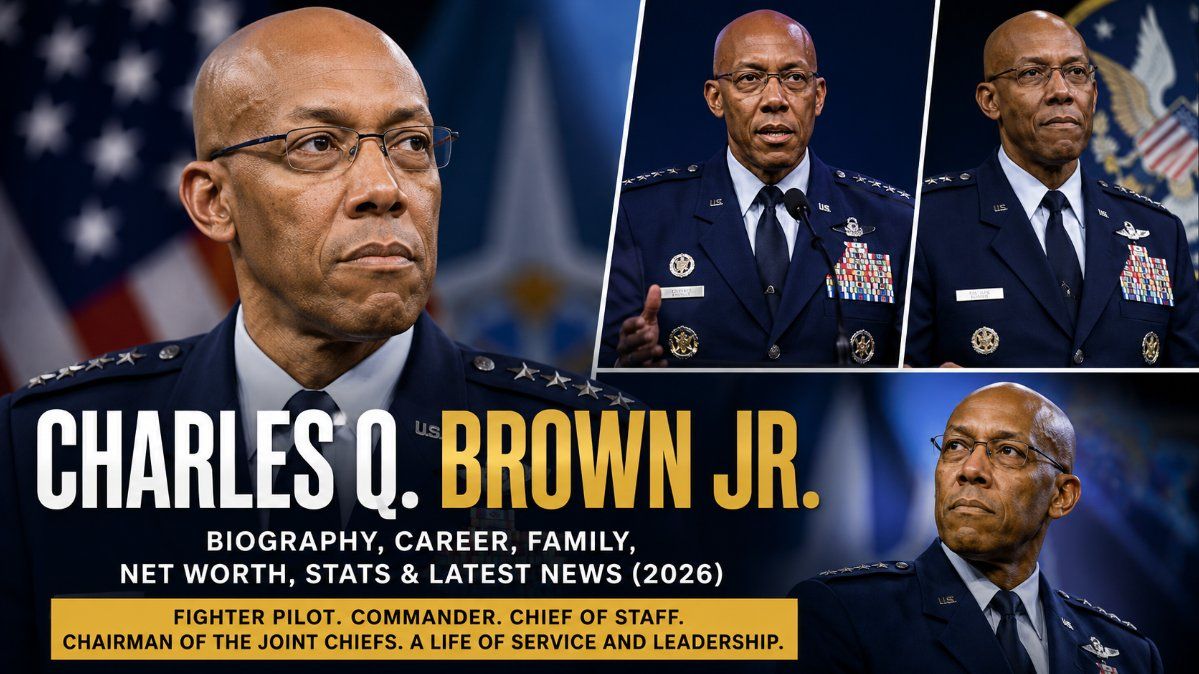
Charles Q. Brown Jr. Biography (2026): Age, Wife, Military Career, Education, Net Worth, Awards & Leadership
Charles Q. Brown Jr. is a retired United States Air Force general who became one of the most influential military leaders in modern American history. Best known for serving as the 21st Chairman of the Joint Chiefs of Staff, Brown spent more than four decades in military service, earning a reputation for strategic thinking, calm leadership, and extensive combat aviation experience. Throughout his career, he held several high-profile commands, led thousands of service members around the world, and helped shape U.S. defense policy during a rapidly changing global security environment.
His journey from a military family to the nation's highest-ranking military officer has inspired countless young Americans, particularly aspiring pilots and future military leaders. Known for his professionalism and commitment to service, Brown has consistently emphasized teamwork, readiness, innovation, and the importance of developing the next generation of leaders.
Charles Q. Brown Jr. Quick Facts
| Details | Information |
|---|---|
| Full Name | Charles Quinton Brown Jr. |
| Popular Name | C.Q. Brown |
| Date of Birth | 1962 |
| Birthplace | San Antonio, Texas, United States |
| Nationality | American |
| Profession | Retired United States Air Force General |
| Famous For | Former Chairman of the Joint Chiefs of Staff |
| Military Branch | United States Air Force |
| Years of Service | 1984–2025 |
| Rank | General (Retired) |
| Education | Texas Tech University |
| Marital Status | Married |
| Spouse | Sharene Brown |
| Children | Two sons |
Who Is Charles Q. Brown Jr.?
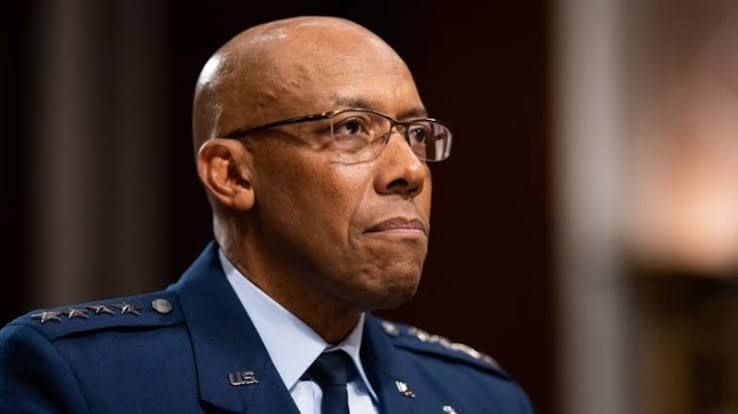
Charles Q. Brown Jr. is widely recognized as one of the most accomplished military officers of his generation. During more than 40 years in uniform, he served in operational, command, and strategic leadership positions across the United States and overseas. His career included assignments in Europe, the Middle East, Asia, and the Pacific, where he gained extensive experience in both combat operations and international military cooperation.
As a fighter pilot, Brown logged thousands of flying hours and participated in numerous operational missions. Over the years, he transitioned from tactical leadership roles to senior positions responsible for overseeing major Air Force organizations and advising national leaders on defense matters.
His appointment as Chairman of the Joint Chiefs of Staff represented the culmination of decades of dedicated military service. In that role, he served as the principal military adviser to the President of the United States, the Secretary of Defense, and the National Security Council, helping guide the nation's armed forces during a period marked by evolving geopolitical challenges.
Beyond his military accomplishments, Brown has earned respect for his thoughtful leadership style. Colleagues frequently describe him as composed, approachable, and focused on empowering those around him rather than seeking personal attention.
Early Life and Family Background
Charles Quinton Brown Jr. was born in 1962 in San Antonio, Texas, into a family with a proud military tradition. His father served in the United States Army, which meant Brown spent much of his childhood moving between different military installations. Like many children raised in military families, he experienced life in several communities, giving him the ability to adapt to new environments from an early age.
Growing up around service members exposed Brown to the values of discipline, integrity, and commitment long before he entered military service himself. Watching his father's career helped him understand the responsibilities that came with wearing a military uniform and inspired him to consider a similar path.
Despite relocating frequently, Brown remained focused on his education and developed a strong interest in mathematics, science, and aviation. Aircraft and military operations fascinated him from a young age, and he gradually became determined to pursue a career as a pilot.
Friends and teachers remembered him as hardworking, respectful, and quietly competitive. Rather than seeking the spotlight, he preferred letting his actions speak for themselves—an approach that would later define his leadership style throughout his military career.
Education and Becoming an Air Force Officer
Brown attended Texas Tech University, where he studied civil engineering while participating in the university's Reserve Officers' Training Corps (ROTC) program. The ROTC experience allowed him to combine academic learning with military leadership training, preparing him for a future career in the United States Air Force.
During his university years, Brown demonstrated strong leadership potential and consistently performed well in both academic and military activities. The ROTC program helped develop essential skills in communication, decision-making, and teamwork while reinforcing the values of honor and service.
After graduating in 1984 with a Bachelor of Science degree in Civil Engineering, Brown received his commission as a second lieutenant in the United States Air Force.
Rather than pursuing a civilian engineering career, he chose military aviation—a decision that would shape the next four decades of his life.
As a newly commissioned officer, Brown entered undergraduate pilot training, where he faced one of the most demanding phases of his professional development. Pilot training required exceptional discipline, technical knowledge, and physical endurance, and Brown successfully completed the rigorous program to earn his wings as an Air Force pilot.
His success during training marked only the beginning of what would become one of the most distinguished flying careers in the modern U.S. Air Force.
The Beginning of an Exceptional Military Career
After qualifying as a fighter pilot, Brown began flying the F-16 Fighting Falcon, one of the Air Force's most versatile and widely used combat aircraft. Early assignments gave him valuable operational experience while allowing him to refine his flying skills under demanding conditions.
Throughout the late 1980s and 1990s, Brown served in a variety of operational squadrons, gradually taking on greater leadership responsibilities. As his experience grew, he became known not only as an outstanding pilot but also as an officer capable of leading teams during challenging missions.
His responsibilities extended beyond flying. Brown participated in mission planning, training younger pilots, and ensuring operational readiness within his units. These experiences taught him the importance of preparation, accountability, and trust—qualities that would become central themes throughout his leadership philosophy.
During this period, he also attended several advanced military education programs, broadening his understanding of strategy, national security, and joint military operations. These educational opportunities prepared him for increasingly senior command positions later in his career.
By combining operational excellence with continuous professional development, Brown steadily built a reputation as one of the Air Force's rising leaders.
Building Experience Through Global Assignments
Unlike many careers that remain centered in one location, Brown's military service took him across the world. His assignments exposed him to diverse operational environments and allowed him to work alongside allied nations in support of shared security objectives.
He served in Europe, the Pacific, the Middle East, and the United States, gaining firsthand experience with international military partnerships and multinational operations.
These assignments helped Brown develop a global perspective on defense and diplomacy. Working with allied air forces strengthened his understanding of coalition operations, while overseas deployments reinforced the importance of cooperation among partner nations.
His growing expertise eventually led to senior leadership positions where he became responsible not only for operational missions but also for shaping future Air Force capabilities and mentoring the next generation of military leaders.
Throughout every stage of his career, Brown remained committed to professionalism, continuous learning, and service before self—principles that would guide him as he advanced toward the highest levels of military leadership.
Rising Through the Ranks of the U.S. Air Force
After establishing himself as a skilled fighter pilot and dependable leader, Charles Q. Brown Jr. steadily climbed the ranks of the United States Air Force. His ability to balance operational excellence with strategic thinking earned him increasingly important assignments throughout his career.
Brown served in numerous command and staff positions, overseeing fighter squadrons, air wings, and major operational units. His leadership style focused on teamwork, accountability, and mission readiness rather than individual recognition. Those who worked alongside him often praised his calm decision-making, especially during complex military operations.
As his responsibilities expanded, Brown became involved in planning large-scale air campaigns, managing personnel, and coordinating with allied forces around the world. These experiences prepared him for some of the Air Force's highest leadership positions.
Extensive Combat and Flight Experience
One of Brown's greatest strengths has always been his operational experience as a combat aviator. Throughout his military career, he accumulated more than 3,000 flying hours, primarily in the F-16 Fighting Falcon. His flying career included both training missions and real-world combat operations in support of United States military objectives.
He also logged hundreds of combat hours during overseas deployments, participating in missions that required precision, discipline, and rapid decision-making. His firsthand understanding of modern air warfare later proved invaluable as he moved into senior leadership roles, allowing him to make strategic decisions based on practical operational experience.
Brown's background as a fighter pilot earned him the respect of fellow aviators and military personnel alike, as he understood the realities faced by service members on the front lines.
Commanding Major Air Force Organizations
As Brown's reputation continued to grow, he was selected to lead some of the Air Force's most important operational organizations. Each assignment brought greater responsibility, requiring him to oversee thousands of military personnel and manage complex global operations.
Among his significant leadership roles were commanding fighter wings, serving within United States Air Forces Central Command, and holding senior positions responsible for air operations across multiple regions.
His leadership responsibilities included:
- Supervising combat readiness and training.
- Leading multinational military exercises.
- Strengthening partnerships with allied air forces.
- Managing operational planning for large-scale missions.
- Supporting modernization efforts across the Air Force.
These assignments demonstrated his ability to lead both during peacetime and in operational environments where quick, informed decisions were essential.
Commander of Pacific Air Forces
One of the defining milestones of Brown's career came when he assumed command of Pacific Air Forces (PACAF), one of the Air Force's largest and most strategically important commands.
PACAF oversees American air operations across the Indo-Pacific region, an area that includes numerous allied nations and some of the world's busiest international security environments.
As commander, Brown became responsible for tens of thousands of military personnel stationed across multiple countries and territories. His duties included strengthening alliances, improving regional security cooperation, and ensuring that American air forces remained prepared for emerging challenges.
During his tenure, he emphasized innovation, joint military cooperation, and maintaining a strong defensive posture while continuing to build relationships with partner nations throughout the Indo-Pacific.
Becoming the 22nd Chief of Staff of the U.S. Air Force
In 2020, Charles Q. Brown Jr. reached another historic milestone when he became the 22nd Chief of Staff of the United States Air Force.
As the service's highest-ranking uniformed officer, Brown assumed responsibility for organizing, training, and equipping the entire Air Force. His role also involved advising the Secretary of the Air Force and the Secretary of Defense on military readiness, modernization, and long-term strategic planning.
Leading one of the world's most technologically advanced air forces required balancing immediate operational needs with future challenges such as cyber warfare, artificial intelligence, advanced aircraft development, and space-related capabilities.
Brown consistently emphasized that innovation and adaptability would play critical roles in maintaining the Air Force's effectiveness in an increasingly competitive global environment.
Leading During a Period of Change
Brown's tenure as Chief of Staff coincided with a time of significant transformation within the U.S. military. Rapid technological advances, evolving security threats, and changing geopolitical conditions required military leaders to rethink traditional approaches to national defense.
He encouraged the Air Force to modernize its equipment, improve pilot training, and invest in emerging technologies capable of addressing future security challenges.
Brown also focused on developing future leaders by encouraging mentorship, professional education, and continuous learning throughout every level of the Air Force.
Rather than concentrating solely on equipment and technology, he frequently highlighted that people remained the military's greatest strength.
Appointment as Chairman of the Joint Chiefs of Staff
In 2023, Charles Q. Brown Jr. achieved the highest position available to a serving member of the United States Armed Forces when he became the 21st Chairman of the Joint Chiefs of Staff.
The appointment represented the culmination of nearly four decades of military service and leadership.
As Chairman, Brown became the principal military adviser to the President of the United States, the Secretary of Defense, and the National Security Council. Although the Chairman does not command military operations directly, the role carries enormous responsibility in shaping military strategy, advising civilian leaders, and coordinating among the Army, Navy, Air Force, Marine Corps, Space Force, and other defense organizations.
His responsibilities included evaluating global security challenges, providing military recommendations during international crises, and helping ensure that America's armed forces remained prepared for future conflicts.
Leadership Philosophy
Throughout his career, Brown became known for a leadership style centered on humility, professionalism, and trust.
Rather than seeking media attention, he focused on listening carefully, empowering those under his command, and encouraging collaboration across military organizations.
His philosophy emphasized several key principles:
- Lead by example.
- Never stop learning.
- Develop future leaders.
- Build strong teams through trust.
- Remain adaptable in a changing world.
- Put mission success ahead of personal recognition.
These values helped him earn the confidence of service members from every branch of the military and established him as one of the most respected senior officers of his generation.
Influence Beyond the Military
Brown's influence extends beyond operational leadership. Throughout his career, he has spoken about the importance of integrity, accountability, and lifelong learning.
His speeches frequently encourage young leaders to embrace change, think critically, and approach challenges with resilience rather than fear.
Many universities, leadership organizations, and military institutions continue to study his leadership approach as an example of modern strategic leadership.
Even after retiring from active military service, Brown remains widely respected for his decades of service and his contributions to strengthening the United States Armed Forces.
Life Beyond the Uniform
Although Charles Q. Brown Jr. is best known for his military achievements, he has always placed great importance on family and personal values. Throughout his decades of service, Brown balanced the demands of military leadership with his responsibilities as a husband and father.
Those who have worked with him often describe him as approachable, thoughtful, and respectful. Despite holding some of the highest positions in the U.S. military, he has maintained a reputation for humility and professionalism rather than seeking public attention.
Away from official duties, Brown has frequently spoken about the importance of mentorship, education, and preparing future generations of leaders. He believes that leadership is built through trust, accountability, and continuous learning rather than authority alone.
Family and Personal Life
Charles Q. Brown Jr. is married to Sharene Brown, and the couple has two sons. Throughout Brown's military career, Sharene has been an active supporter of military families, participating in various community programs and initiatives that assist service members and their loved ones.
Like many military families, the Browns experienced frequent relocations during his career. Despite these challenges, they have consistently emphasized the importance of family, resilience, and supporting one another through every stage of military life.
Brown has generally kept his personal life private, choosing to let his professional accomplishments speak for themselves. While he occasionally shares insights about leadership and family during public appearances, he avoids placing his private life in the spotlight.
Retirement and Continuing Influence
After more than four decades of distinguished military service, Charles Q. Brown Jr. concluded his active-duty career in 2025. His retirement marked the end of one of the most accomplished careers in modern U.S. Air Force history.
Although no longer serving in uniform, Brown continues to contribute through public speaking engagements, leadership forums, educational institutions, and strategic discussions related to national security and leadership development.
His decades of experience remain valuable to military professionals, policymakers, and aspiring leaders who seek guidance on navigating complex organizational challenges.
Brown's legacy is expected to influence future generations of military officers for years to come.
Charles Q. Brown Jr.'s Leadership Legacy
Few military leaders reach the highest levels of command while maintaining the respect of personnel across every branch of the armed forces. Brown achieved that distinction through a combination of operational expertise, strategic vision, and steady leadership.
His legacy includes:
- More than 40 years of honorable military service.
- Thousands of flying hours as an F-16 fighter pilot.
- Leadership of major Air Force commands.
- Service as the 22nd Chief of Staff of the U.S. Air Force.
- Appointment as the 21st Chairman of the Joint Chiefs of Staff.
- A lasting influence on military leadership and organizational development.
His emphasis on innovation, teamwork, and developing future leaders continues to shape conversations about the future of the U.S. military.
Charles Q. Brown Jr. Net Worth
As of 2026, Charles Q. Brown Jr.'s estimated net worth is believed to be between $2 million and $5 million. While he has never publicly disclosed his financial details, his income has primarily come from his long military career, government salary, retirement benefits, speaking engagements, and advisory or academic roles following retirement.
Unlike many public figures, Brown has not been widely associated with commercial endorsements or major business ventures. His professional life has remained centered on public service and national defense.
Awards and Military Decorations
During his distinguished military career, Charles Q. Brown Jr. received numerous honors recognizing his leadership, service, and operational excellence. Among his notable military decorations are:
- Defense Distinguished Service Medal
- Air Force Distinguished Service Medal
- Defense Superior Service Medal
- Legion of Merit
- Distinguished Flying Cross
- Bronze Star Medal
- Meritorious Service Medal
- Air Medal
- Aerial Achievement Medal
- Joint Service Commendation Medal
- Air Force Commendation Medal
These awards reflect decades of dedicated service, leadership, and contributions to the United States Armed Forces.
Interesting Facts About Charles Q. Brown Jr.
- His full name is Charles Quinton Brown Jr.
- He was born in San Antonio, Texas.
- Brown graduated from Texas Tech University with a degree in Civil Engineering.
- He earned his commission through the Air Force ROTC program.
- He flew the F-16 Fighting Falcon for much of his operational career.
- Brown accumulated more than 3,000 flight hours, including hundreds of combat hours.
- He served as Commander of Pacific Air Forces before becoming Chief of Staff of the Air Force.
- In 2023, he became the 21st Chairman of the Joint Chiefs of Staff.
- He is widely respected for his calm, collaborative, and people-focused leadership style.
- Throughout his career, he emphasized innovation, mentorship, and preparing future military leaders.
Frequently Asked Questions (FAQs)
Who is Charles Q. Brown Jr.?
Charles Q. Brown Jr. is a retired United States Air Force general who served as the 21st Chairman of the Joint Chiefs of Staff and previously served as the 22nd Chief of Staff of the U.S. Air Force.
How old is Charles Q. Brown Jr.?
He was born in 1962. As of 2026, he is approximately 64 years old.
What is Charles Q. Brown Jr. famous for?
He is best known for becoming one of the highest-ranking military leaders in U.S. history and serving as Chairman of the Joint Chiefs of Staff.
Who is Charles Q. Brown Jr.'s wife?
He is married to Sharene Brown, who has long supported military family initiatives and community programs.
What aircraft did Charles Q. Brown Jr. fly?
During his Air Force career, he primarily flew the F-16 Fighting Falcon and accumulated more than 3,000 flying hours.
What is Charles Q. Brown Jr.'s estimated net worth?
As of 2026, his estimated net worth is believed to be between $2 million and $5 million, based on his military career, retirement benefits, and professional engagements after retirement.
What leadership positions did Charles Q. Brown Jr. hold?
Brown served as Commander of Pacific Air Forces, the 22nd Chief of Staff of the U.S. Air Force, and the 21st Chairman of the Joint Chiefs of Staff.
Final Thoughts
Charles Q. Brown Jr.'s career reflects more than four decades of commitment to service, leadership, and national security. From his early days as a young Air Force officer to becoming the nation's highest-ranking military adviser, he consistently demonstrated professionalism, integrity, and a forward-looking approach to leadership.
His achievements extend beyond military titles and decorations. Brown's emphasis on developing people, embracing innovation, and leading with humility has left a lasting mark on the United States Armed Forces. As one of the most respected military leaders of his generation, his story continues to inspire future service members, aviation enthusiasts, and anyone striving to lead with purpose and dedication.